
SMET Greenhouse Gas Emissions Performance 2025
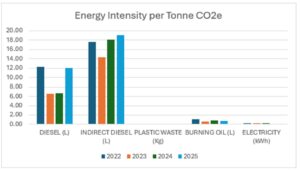
We measure our greenhouse gas (GHG) emissions using an energy intensity per tonne approach, allowing us to track efficiency improvements relative to business activity.
SMET Greenhouse Gas Emissions Performance 2025
Since establishing our baseline in 2022, we have made measurable progress while continuing to identify areas for further improvement.
Scope 1 – Direct Emissions (Company-Owned Diesel)
• Down 1% since baseline year (2022)
• Up 44% compared to last year
The increase in the past year reflects a change in logistics operations, with additional travel required to collect bulk materials that were previously delivered directly to our warehouse in a port location. While this has temporarily increased emissions intensity, we are actively reviewing logistics efficiencies to address this.
Scope 2 – Indirect Energy Emissions (Heating Oil and Electricity)
• Down 51% since 2022
• Down 22% compared to last year
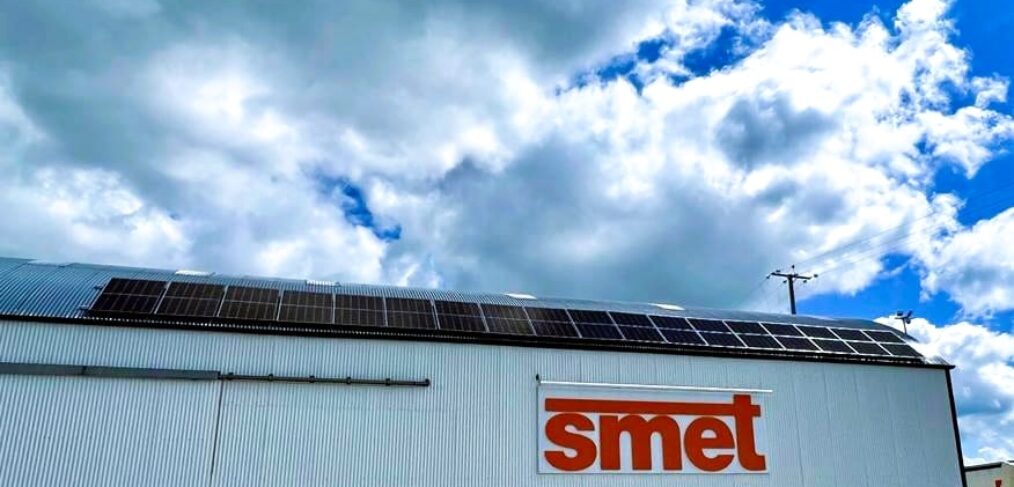
This significant reduction reflects improved energy efficiency and better management of heating and electricity usage across our operations, thanks to the implementation and efficiency of our solar PV System. All electricity used is sourced from 100% renewable green energy supplied by Power NI, delivering locally generated electricity with zero carbon emissions.
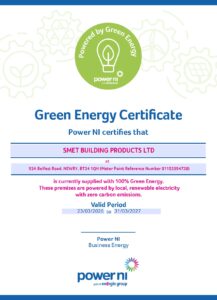
Green Energy Certificate_Power NI | Click to view
Scope 3 – Value Chain Emissions (Indirect Sources)
Including plastic packaging from Big Bags and third-party transport such as inbound deliveries and contracted logistics.
• Up 7% since 2022
• Up 5% compared to last year
This is a natural consequence of growth. When these bags reach the end of their life, they are baled, collected, and processed through a mechanical recycling system to be repurposed into new plastic products, fostering a circular economy.
Our logistics partner, United Pallet Network, calculates the carbon footprint of all palletised freight deliveries handled by its members across the UK and offsets carbon to become carbon neutral.
Our Commitment
- Monitoring and measuring our emissions annually
- Improving energy efficiency across all areas of the business
- Working with suppliers and partners to reduce value chain emissions
- Identifying practical, sustainable alternatives in logistics and materials handling
While some fluctuations are driven by operational changes, our overall focus remains on continuous improvement and long-term emissions reduction.